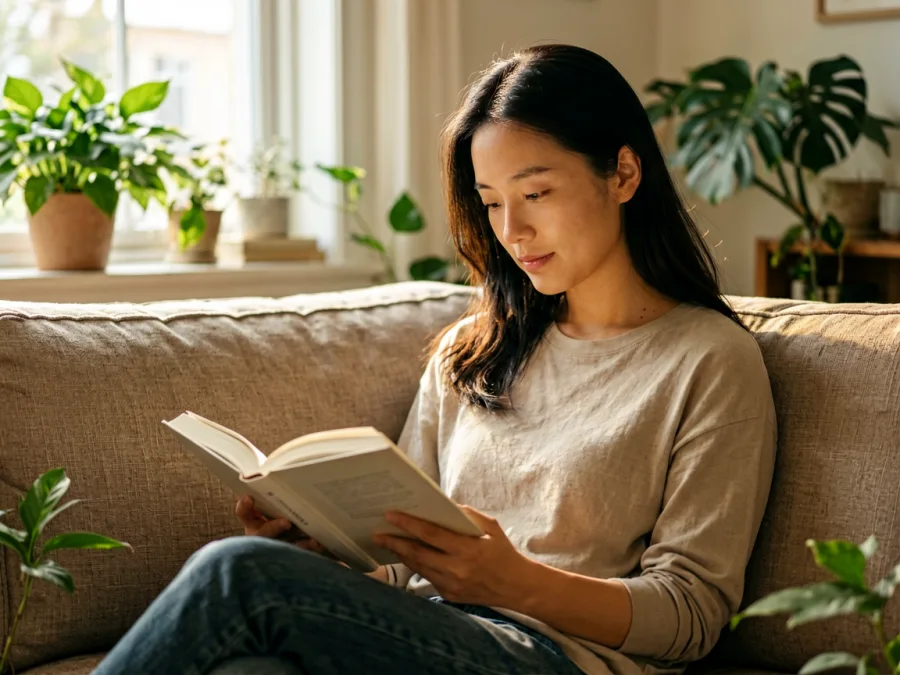
In popular narratives, being single is often misunderstood as a state of “waiting,” as if life only feels complete once you find a partner. However, from a psychological perspective, this period of singledom is actually a highly valuable journey of self-exploration. When there is no partner on our side to support us or drain us, we are forced to face our truest selves: what we truly love, what we dislike, and how to maintain inner stability without external validation.
Redefining Solitude: From Passive Endurance to Active Choice
Many single people feel pain not because they are single, but because they are trapped in a state of “passive solitude.” In this mindset, being alone means being isolated by societal standards and projecting anxiety about unknown relationships. To shift this perspective, we need to view solitude as “active self-nourishment.”
According to attachment theory, the foundation of secure attachment lies in the ability to connect with others independently and confidently, rather than viewing them as the sole refuge. During a single period, practicing time with yourself is essentially polishing this secure base. Only when you no longer fear the quiet of the night and no longer rely on others' immediate responses to confirm your self-worth do you truly possess the capacity to enjoy intimate relationships.
- Distinguishing Loneliness from Solitude: Loneliness stems from the anxiety of a broken connection, while solitude is a state of fullness. Try to journal about the moments during the day that make you feel “comfortable,” reinforcing the positive experience of being alone.
- Accepting Rather Than Suppressing Emotions: When feelings of loneliness strike, don't rush to fill the void through socializing or consumption. Instead, observe this emotion quietly and ask yourself: What specifically is it trying to say?
Building an Independent Life System and Sense of Value
The core of self-growth lies in establishing a value coordinate system that does not depend on others. In romantic relationships, we easily anchor our self-worth to our partner's feedback; during a single period, this is the best time to reconstruct the answer to “Who am I?”
This is not just about cultivating one or two hobbies, but about building a complete closed-loop lifestyle. This includes your living space, dietary routines, work rhythm, and spiritual sustenance. Cognitive Behavioral Therapy (CBT) reminds us that our thought patterns shape our emotions, which in turn influence our behavior. If you believe internally that “being single is tragic,” your behavior will become shrinkingly cautious; if you believe that “being single is freedom,” your behavior will become expansive and relaxed.
Specific Execution Strategies
- Spatial Minimalism: Clear out items in your home associated with ex-partners or past dependencies, allowing your physical environment to match your psychological state of independence.
- Deepening Skills: Choose a skill that requires long-term investment (such as playing an instrument, coding, or cooking). Experience the sense of control that comes from going from beginner to expert; this sense of mastery will transfer into an overall confidence in life.
- Financial Independence and Planning: Define your financial baseline and goals to eliminate potential compromises in relationships caused by economic dependence.
Deepening Self-Dialogue and Emotional Granularity
Nonviolent Communication (NVC) is not just for interpersonal communication; it is also a tool for self-communication. A single period is an excellent time to practice self-NVC. We need to accurately identify our emotions and distinguish between “observation” and “judgment.”
For example, instead of saying “I am always lazy,” say “I noticed that I postponed my exercise plan three times this week (observation), and I feel a bit self-blaming (feeling), because I value health (need).” By increasing the granularity of our emotions, we stop being slaves to our emotions and become their observers and managers.
Preparing for Future Intimate Relationships
Many people worry that a single period will make them distant from potential partners, but in fact, the opposite is true. A person who understands solitude and possesses a rich inner world is less likely to lose themselves in a relationship and better able to provide high-quality emotional support. Your independent personality is the strongest magnetic field that attracts healthy partners.
During this single period, do not hesitate to review past relationship patterns. Identify the “core beliefs” that cause you to repeatedly fall into the same types of conflict. Is it a fear of being abandoned? Or a fear of being engulfed? Through self-reflection, we can transform past trauma into future wisdom.
Practices You Can Do Immediately
Here are three specific, actionable small exercises to help you transform this single period into fuel for growth starting today:
- Exercise One: Three-Minute Daily Silent Awareness.
Set aside a short, undisturbed period in the morning and evening each day. Put down your phone, stop reading, and simply breathe quietly. Observe the thoughts arising in your mind without judging or following them; just watch them appear and disappear. This trains your mindfulness, helping you break free from automatic emotional reactions. - Exercise Two: Establishing an “Independent Reward System.”
Set a short-term goal that you can achieve entirely on your own (such as finishing a book, running 5 kilometers, or preparing a complex dinner). Once achieved, give yourself a tangible reward and affirm yourself verbally: “I did this on my own, and I am doing great.” - Exercise Three: Writing a “Personal Needs List.”
Take a piece of paper and list your five most important needs in life, emotionally, and spiritually. Then, for each need, write out an action plan that can be fully satisfied by yourself, without relying on others.


