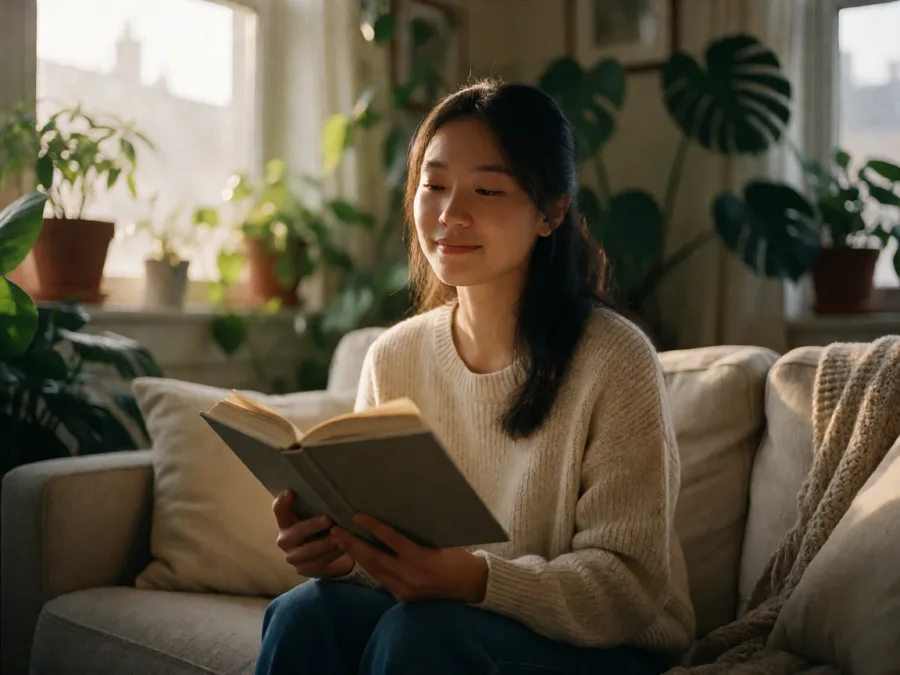
In today's social context, being single is often branded with negative labels of being "incomplete" or "lonely." Many people, upon entering a single state, easily fall into a compensatory psychological pattern regarding intimate relationships, attempting to fill the void within by immediately seeking a partner. However, this urgency often turns solitude into a form of suffering rather than rest. In reality, the single phase is a rare "window period" in life, offering a space-time where one does not need to compromise with others and can be entirely faithful to oneself. How to transform this period from passive endurance to active self-nourishment is a topic worthy of deep reflection for everyone in this stage.
I. Distinguishing Loneliness from Solitude: Analyzing Psychological Mechanisms
First, we need to clarify two concepts that are often confused: loneliness and solitude. Loneliness is a subjective negative emotional experience stemming from the gap between desired social connection and what is actually achieved; it is accompanied by anxiety, helplessness, and diminished self-esteem. Solitude, on the other hand, is a state of active choice, where an individual temporarily disengages from social environments to restore energy and engage in reflection, typically bringing peace, freedom, and creativity.
Many people suffer while single not because they truly enjoy being single, but because they have not yet mastered the skill of "solitude." When internal order is chaotic, solitude amplifies internal noise. According to Self-Determination Theory, basic psychological needs include autonomy, competence, and relatedness. During the single period, if the first two needs are met while the need for relatedness is temporarily unmet, the individual must learn how to maintain inner stability without relying on external feedback.
- Loneliness is a lack of connection: It is a passive emotional state that creates a sense of emptiness and unease, often driving people to blindly seek external attention or enter unhealthy intimate relationships to escape the void.
- Solitude is active space: It is an active psychological choice aimed at integrating internal resources by temporarily disconnecting from external links, thereby deepening self-awareness and rebuilding mental strength.
- Key turning point: The prerequisite for transforming solitude into nourishment is the individual's ability to regulate emotions and tolerate temporary "disconnection" without falling into panic.
Therefore, the first step is not to find a partner, but to learn to coexist with your own state. When you feel lonely, don't rush to act; instead, stop and observe this emotion, asking yourself: "What do I truly need right now?"
II. Establishing Internal Order: Reshaping Your Life Rhythm
In a partnered lifestyle, many decisions are made jointly, and rhythms are adapted to each other. Being single means you must take sole responsibility for all the details of life. This "full responsibility" may initially bring stress, but in the long run, it is an excellent opportunity to build self-efficacy. By managing your own life well, you are actually practicing how to love better.
Establishing internal order centers on shifting from a relationship-centric life to a self-centric life. This does not mean being selfish, but returning to one's roots. You need to re-examine your sources of energy: which activities recharge you, and which drain you?
- Reshaping Space: Don't just stay in the room; go arrange your space. Create a comfortable reading corner, or organize a photo wall that belongs solely to you. Space is the externalization of psychology; an orderly and warm environment can significantly reduce anxiety levels.
- Autonomy over Time: Redirect the energy previously spent coordinating partner schedules and handling household chores to yourself. Establish fixed "self-care moments," such as every Tuesday from 8:00 PM to 10:00 PM. This time belongs only to you, for developing interests or pure rest.
- Building Rituals: Rituals give meaning to ordinary life. Whether it's a cup of hand-drip coffee or a weekly hiking trip, these small repetitive behaviors build stability in life and counteract the turbulence brought by being single.
When your daily life has a solid framework, you will realize that even without others around, you are still a complete world. This "completeness" is the foundation for attracting healthy relationships and the confidence for self-growth.
III. Deep Self-Dialogue: Exploring Subconscious Needs
The single phase is the best time for deep self-dialogue. In relationships, we often understand ourselves through the other person's reactions; in solitude, we must face ourselves directly. This requires higher introspective ability. Use this period to apply the self-compassion from "Nonviolent Communication" to explore those suppressed needs and fears.
Often, our longing for intimate relationships masks other unmet psychological needs. For example, the desire for attention may stem from a lack of security in early years; the desire to be understood may stem from low self-worth. Through writing or meditation, make these vague feelings concrete.
You can try asking yourself: If there were no partner, how would an ideal day be spent? Am I afraid of being "alone" or "abandoned"? Am I using busyness to mask emptiness? These questions have no standard answers, but the process of thinking itself is healing.
IV. Cultivating the Ability of "Positive Solitude"
Positive Solitude is more than just daydreaming; it is a constructive psychological activity. Psychologists point out that individuals with "high self-complexity" are more likely to experience happiness when alone. They can flexibly switch between different self-roles and do not collapse due to the loss of a single identity.
During your single period, you can intentionally cultivate skills or hobbies that require deep focus. Whether learning a foreign language, reading philosophy, playing a musical instrument, or gardening, these Flow Experiences allow you to enter a state of self-forgetting, gaining deep satisfaction. This satisfaction does not depend on external praise, but stems from the harmony of internal order and the improvement of capability.
At the same time, learn "digital disconnection." In an era of information overload, passively receiving social media often intensifies comparison and loneliness. Regularly turn off phone notifications, stay away from social media, return to offline life, and build connections with real plants, animals, or books. This effectively repairs the mind disturbed by fragmented information.
V. Internalizing Growth: Preparing for Future Relationships
The ultimate goal of being single is perhaps not to remain single forever, but to become an "independent and complete" individual. When you no longer need a relationship to define yourself, and no longer lower your standards to please others out of fear of loneliness, you gain true choice. If you choose to enter a relationship at this point, it is based on the desire to "add decoration to a brocade," not a survival instinct to "give charcoal in the snow." Such a relationship is more likely to be built on equality, respect, and freedom.
At this stage, you can reflect on past relationship patterns and identify repetitive mistakes. Is it avoidant attachment that makes it hard to get close? Or anxious attachment that leads to excessive demands? Understanding these patterns is not to blame your past self, but to make different choices at the next crossroad. The single period is a mirror; it reveals your vulnerability and illuminates your resilience.
Exercises You Can Do Immediately
The following is a three-day "Solitude Nourishment" micro-exercise, designed to help you quickly shift from passive endurance to active enjoyment:
- Day 1: Emotional Audit. Spend 15 minutes before bed recording moments when you felt lonely or anxious today. Do not judge; only record triggering events and physical sensations. Write in your journal: "I allow myself to feel lonely; this is just a signal, not a mistake."
- Day 2: Space Awakening. Choose a corner of a room and thoroughly clean and arrange it. Place your favorite aromatherapy, a warm desk lamp, and a book you want to read. Set a rule: only in this corner can you be alone. This turns solitude into a "privilege" rather than a punishment.
- Day 3: Flow Experience. Set aside one hour, completely cut off from the internet, and do something you once loved but haven't done in a long time (like puzzles, drawing, or cooking). Focus on the process, not the result. Afterwards, ask yourself: "In this hour, did I feel empty or fulfilled?"
Through these small actions, you will gradually discover that solitude is not the opposite of life, but the deepest part of it. When you learn that you are your own best partner, the world no longer feels so cold.


