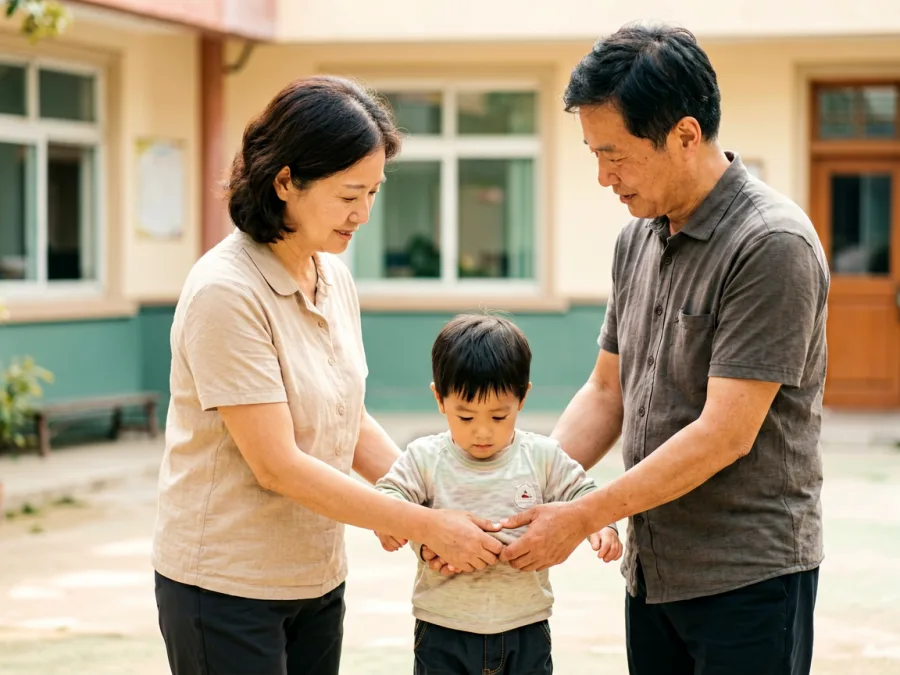
The Story Begins
How do you co-parent after a divorce? This article shares a collaborative case study.
The Individual's Struggles
Here is a real account shared by the individual involved (name withheld for privacy):
"I always felt unsettled in the relationship. No matter what my partner did, it never felt like enough. If he was slow to reply to my messages, I would assume he didn’t care about me anymore. I would check his phone. Even though I knew there was nothing wrong, I couldn’t stop myself."
Professional Analysis
From a psychological perspective, this reflects a typical pattern in post-divorce co-parenting. The core characteristics include:
- Hypervigilance: Extreme sensitivity to relationship signals
- Separation Anxiety: Intense discomfort triggered by brief separations
- Need for Reassurance: A constant search for assurance from the other party
- Catastrophic Thinking: Magnifying minor issues into potential relationship-ending crises
The Path to Change
After a period of professional help and self-directed learning, the individual discovered several effective strategies:
Strategy 1: Emotion Journaling
Whenever feeling unsettled, record the following:
- The triggering event (What did the other person do?)
- The automatic thought (What story did I create in my mind?)
- The emotional intensity (Scale of 0-10)
- The alternative thought (Another possible explanation)
- Re-evaluation
Strategy 2: Self-Soothing Techniques
- Deep breathing exercises (4-7-8 technique)
- Physical comfort (Hugging a pillow, taking a hot bath)
- Distraction (Exercise, reading)
Strategy 3: Direct Communication
Instead of testing or interrogating the other person, express feelings directly:
"You haven't replied to my messages in a while, and I'm starting to feel a bit anxious. I'm not trying to control you; I just want you to know how I'm feeling."
Outcomes and Reflections
Three months later, the frequency of the individual's anxiety dropped from several times a day to one or two times a week. They shared:
"I finally realized that a sense of security is not something the other person gives you; it is something you build within yourself. When I no longer needed constant reassurance, our relationship actually became much easier."
For Those in Similar Situations
Change is a gradual process; do not rush it. Every small step forward deserves recognition. Remember:
- Your feelings are real and deserve attention
- Seeking help is not a sign of weakness, but of courage
- Change takes time; give yourself permission to move slowly
- You deserve to be loved, and you deserve to learn how to love yourself
Note: This case was shared with the individual's permission. Details have been simplified to protect privacy.


