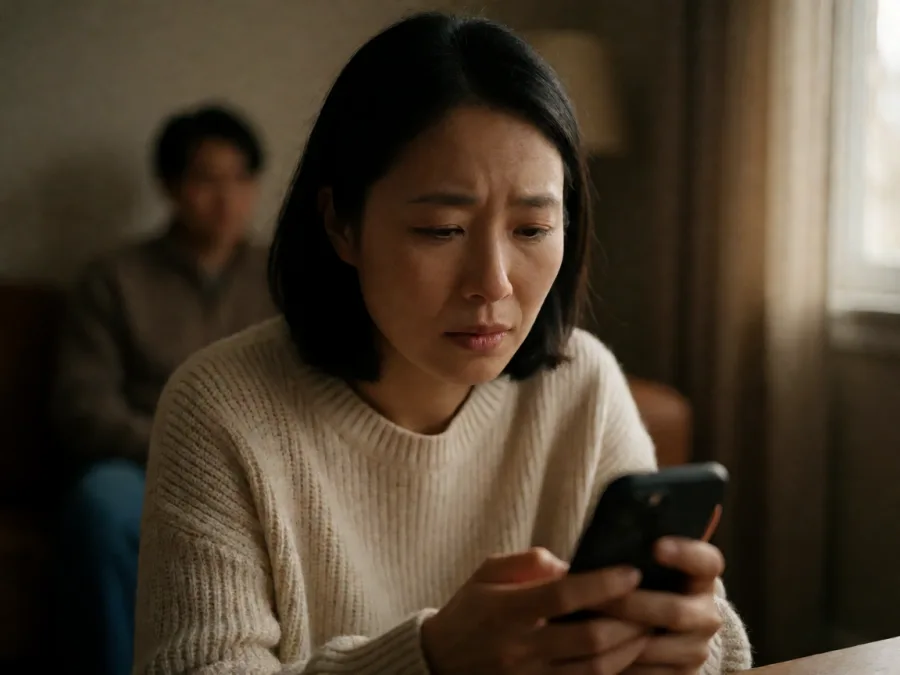
You have a near-instinctive ability to catch others' micro-expressions and shifts in tone. A casual remark from a peer might be replayed and analyzed in your mind late at night; a slightly cold glance in a meeting can trigger anxiety that lasts all day. This trait is often misread as indecisiveness or fragility, but it is essentially a high-throughput processing of stimuli by the nervous system. Sensitivity is like an antenna with extreme gain—it receives signals sharply but is easily distorted by overload.
Sensitivity is Both a Gift and a Burden
Empathy is your most unique competitive advantage. You can keenly perceive unspoken grievances during team disputes and understand the loneliness of a partner who craves to be seen in their silence. This high perception makes you a nuanced supporter in relationships. However, a receiving end without filtering mechanisms is often the first to be damaged. Trying to cover up sensitivity with a "carefree" attitude or forcing suppression with "just let it go" only leads to internal wear and tear. Stop attacking yourself; acknowledge the differences in neural types rather than rushing to correct them.
The first step in acceptance is stopping the definition of sensitivity as a fault that needs fixing. It is simply a different bandwidth configuration.
- Redefine the Label: Reframe "too sensitive" as "high insight," recognizing the advantage in understanding it brings.
- Stop Self-Attack: Identify the secondary internal wear caused by suppressing sensitivity; acknowledge that this is a physiological basis, not a character flaw.
Create a Buffer for External Stimuli
Since your receiving capacity is strong, you must install a filter at the input end. Reducing the daily intake of high-intensity emotions is a form of physical protection. In the era of information explosion, algorithms precisely push high-intensity emotional content. Highly sensitive individuals need to actively cut off this high-frequency shock to leave silent cooling space for their nervous system.
Practical scenarios for establishing a "physical pause button" include: When you feel information overload, set aside 15 minutes of alone time to leave screens and social settings. When facing a necessary conflict conversation, implement the "five-second silence" strategy. Before speaking, stay silent and take a deep breath. These five seconds are not a delay, but allow the rational brain (prefrontal cortex) to regain control over the amygdala, preventing instinctive defensive reactions.
- Noise-Reduction Mechanism: Set aside one hour a day as an "information vacuum period," where you do not browse news or talk to anyone, allowing emotions to settle.
- Conversation Buffer: In heated emotional conversations, use the phrase "I need a little time to digest what you just said" as a buffer.
Establish an "Emotional Shower" Habit
Emotions are like a shower; staying in high-temperature water for a long time burns the skin. Highly sensitive people tend to accumulate minor setbacks from the day into emotional "scale," leading to late-night rumination. Establish a daily routine for clearing emotions to prevent backlog-induced short-circuits. This is not self-soothing, but objectifying emotions through expression, turning them from "a vague black fog" into "specific, manageable events."
Two executable clearing methods are recommended. The first is the "Five-Sense Grounding Method": Before bed, write down one hurtful word you heard, one image you saw, and one moment of discomfort today. The second is "Somatic Release": Perform 10 minutes of non-competitive aerobic exercise to let cortisol be metabolized with sweat. The key is to transform the tendency to let emotions "overnight" into the action of "closing out the day's business today," avoiding the stacking of old wounds with new ones.
Set Psychological Boundaries in Relationships
Highly sensitive individuals often over-absorb others' emotions due to a desire for harmony, leading to blurred self-boundaries. True gentleness is built on self-integrity, not self-sacrifice. When the other person breaks down emotionally, you do not need to bear 100% of the weight; bearing 50% listening and 50% boundary is a healthy state. Setting boundaries is not being cold, but clarifying which emotions fall within your scope of responsibility and which are the other person's task.
Use "Nonviolent Communication" to set boundaries. When a partner is anxious and cannot calm down late at night, you can use the phrase: "I see that you are very upset (Observation), and I am also very worried (Feeling), but I am very tired now, we need to rest separately for a while and talk again tomorrow (Need and Request)." This preserves the intention of connection while drawing a red line for self-protection, preventing being swept away by the other person's emotional vortex.
Seek Professional Support Instead of Enduring It Alone
If sensitivity has evolved into persistent panic, avoidance, or somatic symptoms (such as palpitations or insomnia), it has gone beyond the scope of self-regulation. At this point, seeking psychological counseling or psychiatric intervention is scientific and necessary. Highly sensitive individuals often refuse to seek help due to high self-demands, believing that asking for help is a sign of weakness. In fact, recognizing the right time to seek help is the highest form of self-care.
View professional support as an "external scaffold," just as a scaffold is essential for a high-rise building. When psychological distress is severe, let professionals help you identify emotional triggers and develop long-term coping strategies. Popular science articles provide a thinking framework, while counseling addresses deep-seated trauma and adaptation issues.
Sensitivity is not a flaw, but a high-resolution map given by the world. First learn how not to get lost on the map, then decide where you want to go.
Witnessed by Pao Niu Emotional Academy: You, who are highly sensitive, are an indispensable gentle guardian in relationships. Only by taking care of your own antenna first do you have the strength to love this world.